![Logo du Comité Champagne [studiometa]](/themes/custom/champagne/logo.svg)
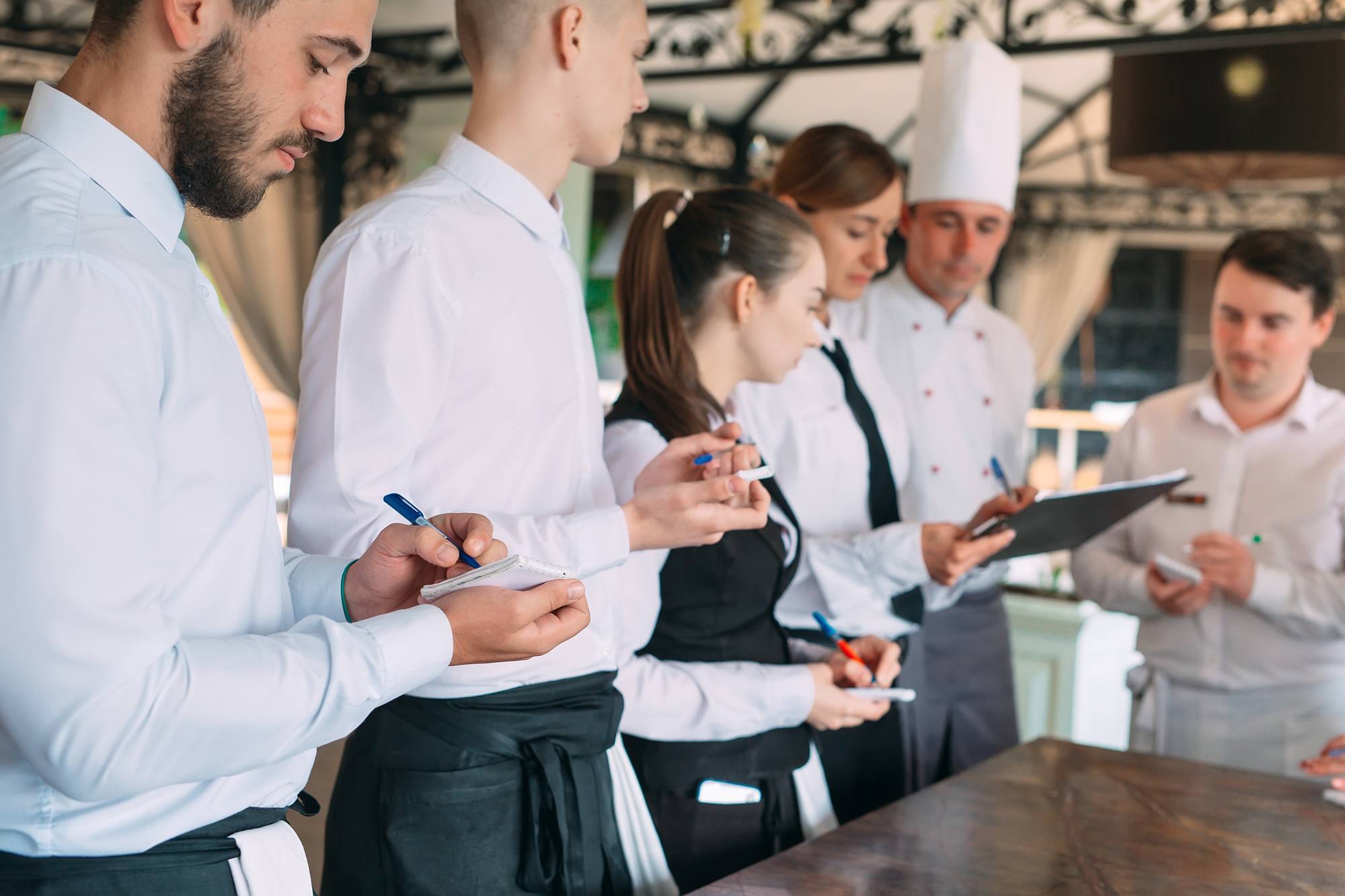
In the hospitality sector (hotels, restaurants, pubs, bars...), training is not just a "bonus." Customers are more demanding, more curious, and look for a precise, seamless, and well-informed service. To meet this demand, having teams trained in the following areas: product knowledge, service gestures, advising, sales, communication, is a necessity. However, in day-to-day operations, a dilemma persists: how do you train when schedules are tight, staffing is limited, and peak hours are frequent? Many managers give up on training because they fear the lack of time, the indirect costs, or the risk of disrupting their schedules.
Yet, solutions do exist. Simple, time-efficient formats that transform training into a natural reflex, integrated into the daily routine rather than treated as an exceptional event. In this article, we offer three actionable ideas you can implement right away to develop your teams' skills.
Idea #1 — Micro-training integrated into the briefing (5 minutes)
An express format, powerful and easy to turn into a ritual. The briefing is a key moment of the day: everyone is there, focused, just before the rush. This makes it the ideal slot to pass on a short, immediately applicable skill.
Micro-training consists of integrating a few minutes dedicated to a specific skill, gesture, or concept into this briefing.
How to do it in practice?
For 5 minutes, you introduce a simple skill, for example:
- a service gesture (correctly opening a bottle of Champagne, presenting a dish),
- a sales phrase or a way to suggest a cuvée or a dish,
- a mini product briefing (a featured cocktail, a new cuvée, a specific cooking method),
- a standard response to an objection,
- a quick-to-memorize food and wine pairing.
This short moment can take several forms: a quick demonstration, a role-play between two team members, a mini oral quiz to energize the team, or a memo card to keep in a pocket.
The important thing is to vary the formats so that the micro-training remains lively, engaging, and never routine.
To maintain motivation, rotate the speakers. One day, the chef demonstrates a culinary technique; another day, the sommelier explains the DNA of an appellation, or an experienced server shares a tip on how to sell a bottle at a table. This variety creates rhythm while valuing internal expertise.
Why does it work?
Because a skill learned just before being used sticks better. The team moves directly from understanding to action, which makes memorization faster and longer-lasting. It is also a fantastic tool for establishing a culture of continuous learning, without pressure or scheduling bottlenecks.
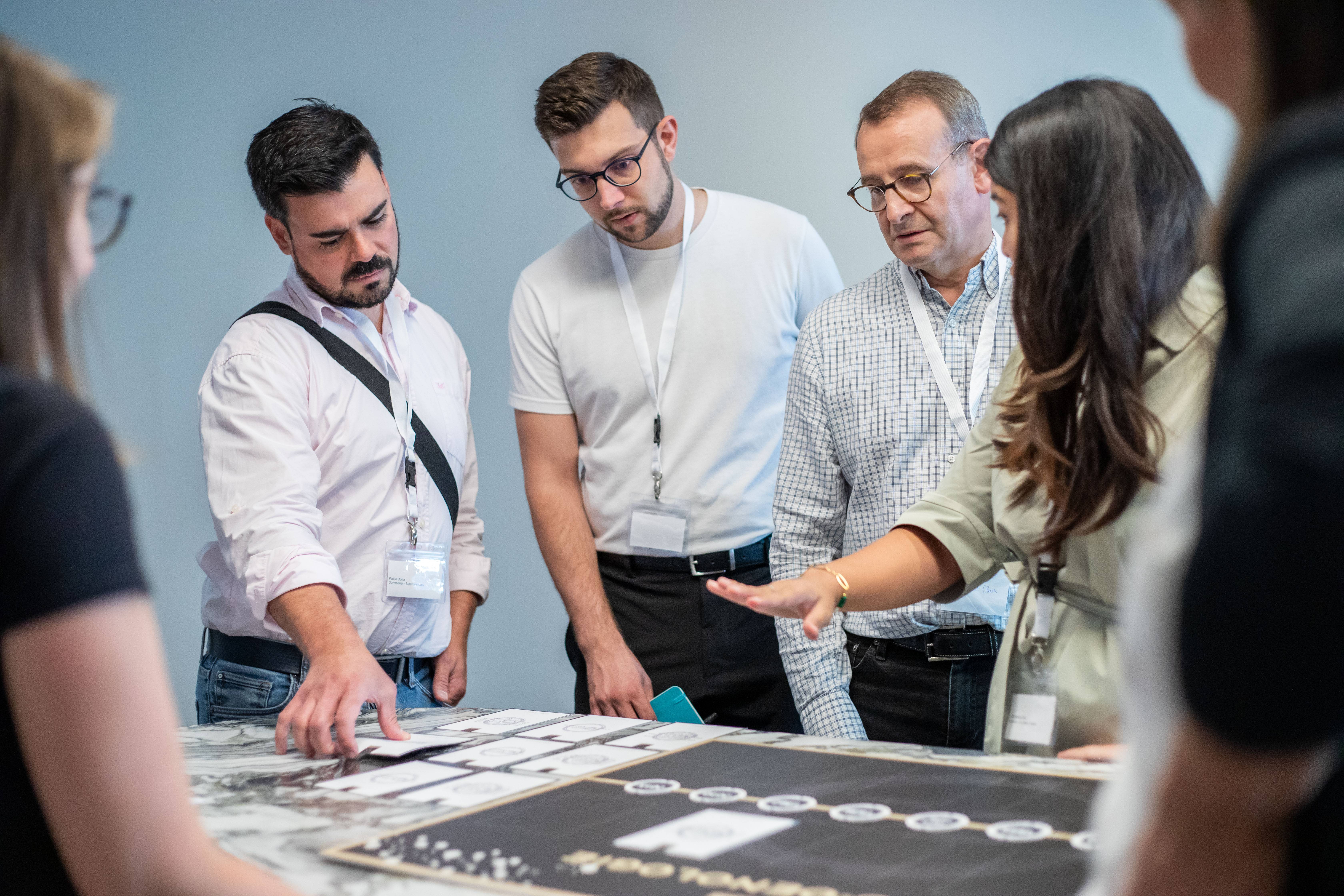
Idea #2 — The "Before / During / After" pathway: enhanced learning without freezing the team
This method is based on an observation: training is not limited to the time spent together. We can optimize this time by preparing the team beforehand and consolidating the learning afterward. The three-step pathway principle reduces downtime while maximizing memorization.
Here is how to structure an effective pathway.
- Before — The team prepares independently (e-learning, materials, video). This step allows everyone to acquire the basics of a subject before the practical workshop, using materials such as: e-learning modules, instructional videos, educational sheets, or online quizzes. To motivate your staff, feel free to introduce a fun element: a challenge or a symbolic reward for the highest scores. This phase requires no suspension of service: everyone progresses at their own pace.
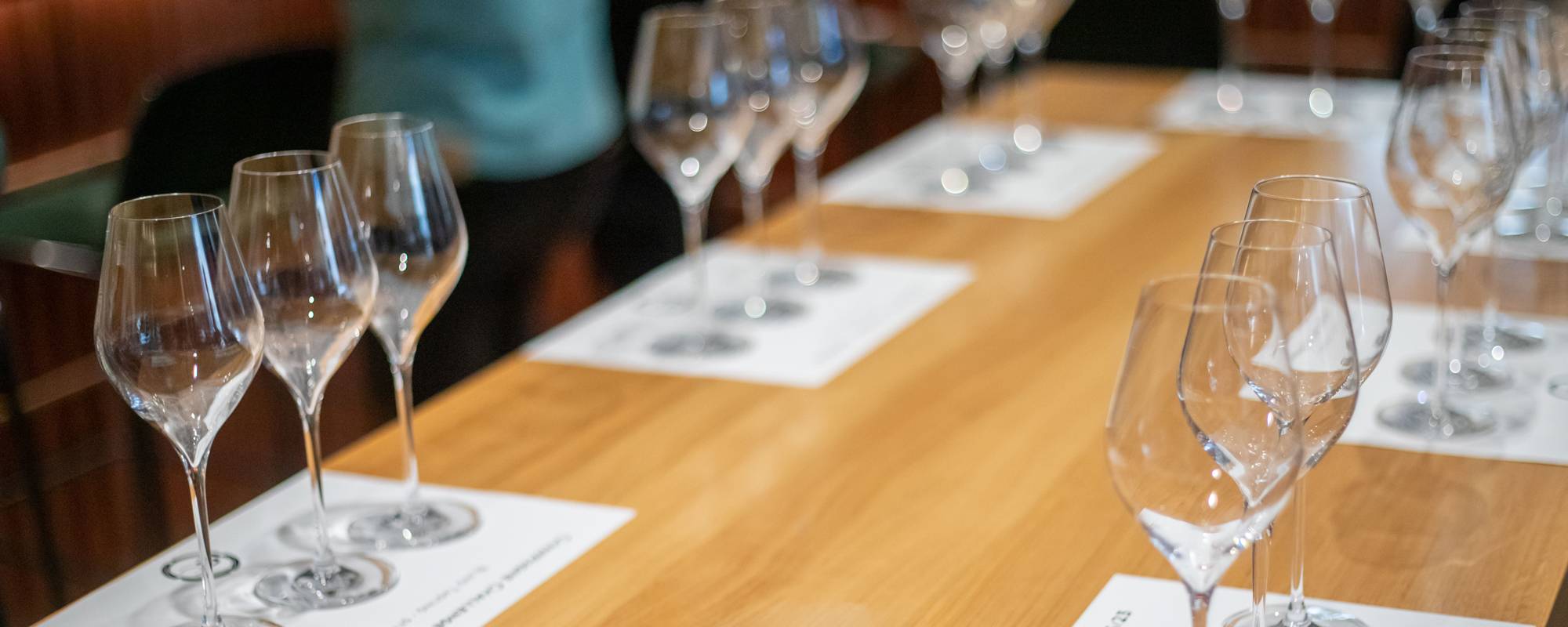
- During — A 30-minute practical workshop. The objective of this step is simple: turn theory into actions and reflexes. Offer a short workshop focused on hands-on practice: an educational tasting (this can be done during a team meal before service), role-playing, or a time to discuss difficulties encountered. This is also the ideal moment to answer questions, clear up misunderstandings, and consolidate what has been learned. Ideal duration: 30 minutes maximum.
- After — A field challenge to verify application. Once the skills have been seen and practiced, you must ensure they are applied in a real-world situation. Offer a short mission to accomplish during the week:
- suggest a food/wine pairing to 5 customers,
- present a different cocktail at each service,
- note down frequent customer questions.
This step creates a direct bridge between learning and field reality. Training is no longer an isolated event: it influences daily service.
Example of a 1-month pathway Here is a simple, directly usable proposal:
-
Week 1 and 2: e-learning module (e.g., Champagne E-Learning Level 1 – 60 min)
-
Week 3: practical workshop – educational tasting of 3 styles of Champagne (30 min)
-
Week 4: role-playing scenario "present a cuvée in less than 2 minutes"
This pathway does not disrupt the schedule but reinforces skills sustainably.
Why does this format work so well?
Because it relies on a fundamental principle : spaced repetition. The brain retains information better when it returns in different formats at multiple times:
-
Theory → understanding
-
Practice → anchoring
-
Field → automation
Furthermore, this training method allows you to rely on your partners and suppliers: you can integrate their products, their expertise, or even ask them to lead a workshop.
Idea #3 — Peer-to-peer training: pairings, role-playing, and participatory workshops
Every establishment is full of experts in their trade: a passionate sommelier, an outstanding maître d'oeuvre, a creative chef, a seasoned server... Peer-to-peer training consists of transforming these experienced employees into mentors, capable of passing on their knowledge on a regular and informal basis.
Part 1: Junior/senior pairings
Pairing a junior employee with a senior employee creates a positive dynamic:
-
the junior learns faster,
-
the senior values their expertise,
-
the manager saves time.
The pairing becomes a spontaneous learning duo: the senior answers questions, gives feedback, corrects movements, and encourages progress. This format also fosters the emergence of future trainers or managers: certain profiles discover a genuine appetite for supporting others.
Part 2: Monthly role-playing
This is a simple, fun, and highly effective method. Once a month, set up a role-playing scenario around a daily situation.
Example:
-
Situation: a corporate client is having lunch with a guest and is looking for a bottle to pair with their menu.
-
Actors: a junior or new employee plays their own role, and an experienced employee plays the role of the customer.
-
Objective: suggest a relevant wine and argue the choice.
-
Constraints: exchange limited to 2 minutes.
-
Debrief: use the following three questions to debrief this exchange: what worked well, what can be improved, what key phrase should we remember?
Role-playing reveals habits, hesitations, gaps... but also good practices to share.
Why is this method effective?
Because it builds on the unique reality of your establishment: your space, your products, your customers, your challenges. Experienced employees have a precise understanding of the situations encountered and share their tips instructionally. New arrivals integrate faster, teams gain cohesion... and service quality increases naturally.
3 simple ideas to create a sustainable training culture
Setting up a regular training dynamic is not a question of time… but of format.
By combining: micro-training (5–10 min), the before/during/after pathway, peer-to-peer training, … you can strengthen collective skills without ever penalizing your service.
Training is not about adding a constraint: it is investing in the peace of mind and quality of your establishment.