![Logo du Comité Champagne [studiometa]](/themes/custom/champagne/logo.svg)
Behind the Champagne appellation lies an impressive diversity of styles, profiles and balances. This plurality can be explained by several choices made in the vineyard or in the cellar. Among these possibilities, dosage is an essential step in defining the final profile of the cuvée. Understanding dosage therefore means understanding one of the most important tools available to producers to create Champagne wines that are varied, expressive and perfectly aligned with their intentions.
In this article, we explain what dosage truly is, why it plays such a central role, and how it makes it possible to offer a Champagne suited to every occasion, from a relaxed aperitif to the most precise food and wine pairings.
1. The foundations: grape varieties, crus, years… and more
Before discussing dosage, it is useful to remember that the identity of a Champagne relies on several dimensions that producers can blend:
Grape varieties
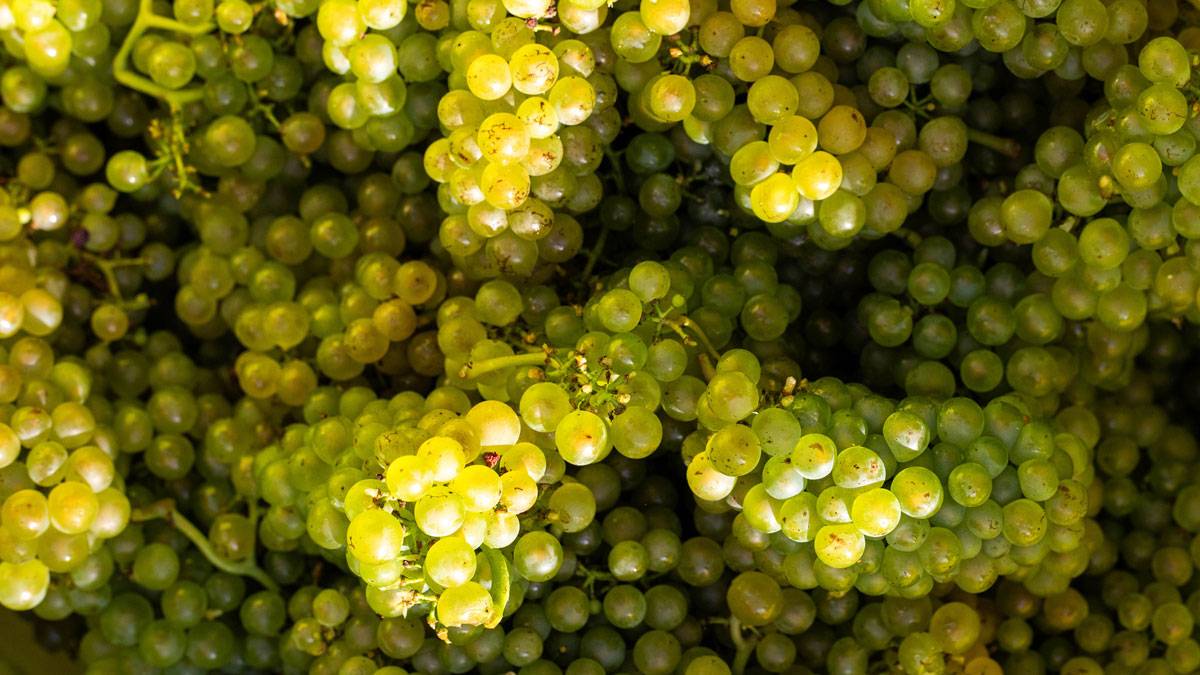
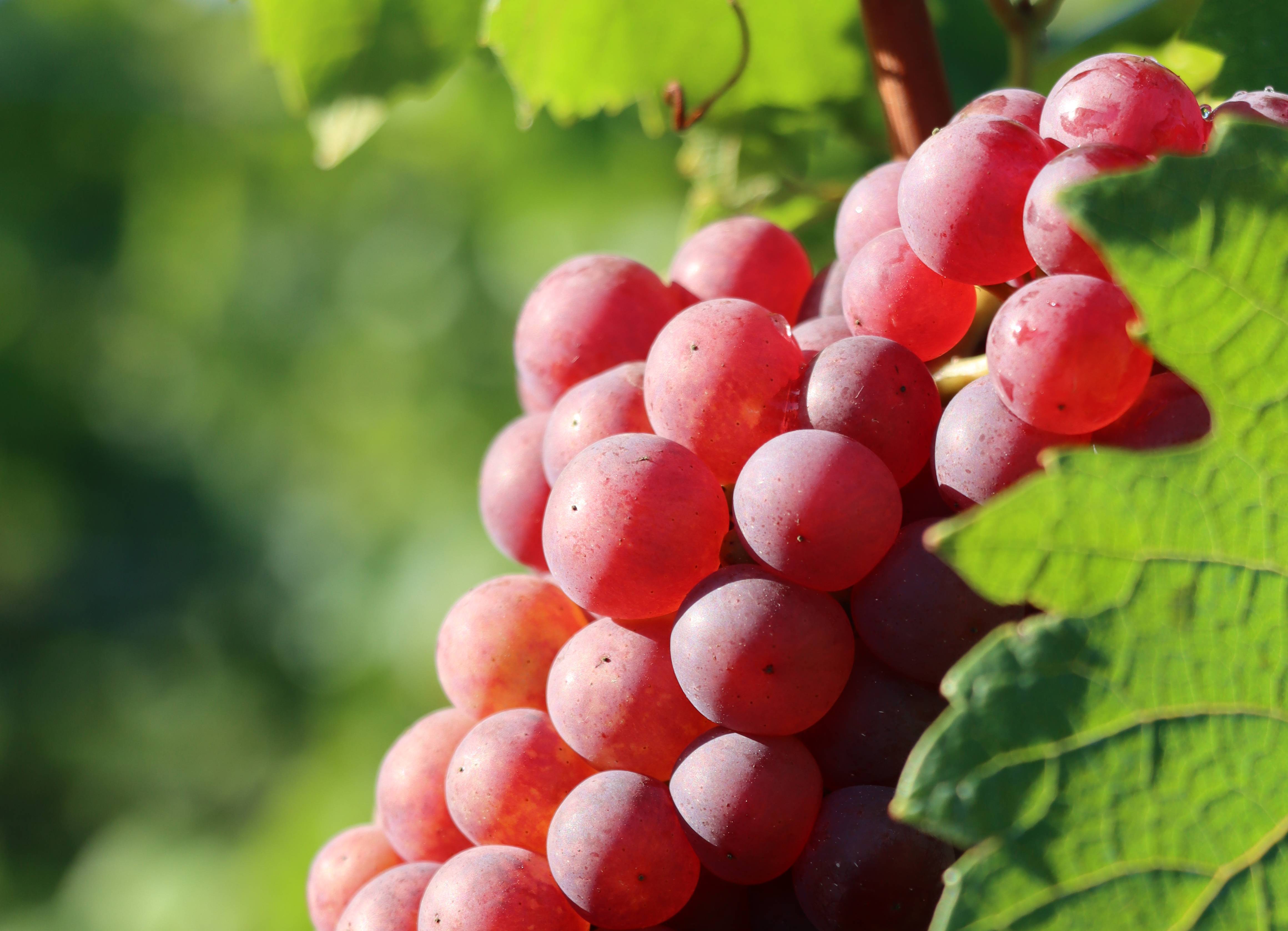
Pinot noir, Chardonnay and Meunier are the three main grape varieties of the appellation. Each brings its own personality: structure and intensity for Pinot noir, finesse and liveliness for Chardonnay, fruitiness and roundness for Meunier.
Crus
Champagne has 319 crus, corresponding to the villages of the Champagne appellation. Each cru has its own character, influenced by its soil, exposure, altitude… This range allows great diversity in blending.
Vintages
Depending on the choices of the chef de cave, a blend may include wines from the current year and/or reserve wines kept from previous years to add balance, complexity and consistency from one bottling to another.
To these dimensions can be added many technical choices: whether or not to carry out malolactic fermentation, whether or not to use oak barrels, the length of ageing on lees, and so on.
Within this complex framework, dosage is the final touch that perfects the balance and profile of the Champagne.
2. Dosage: a precise and decisive step
What is dosage?
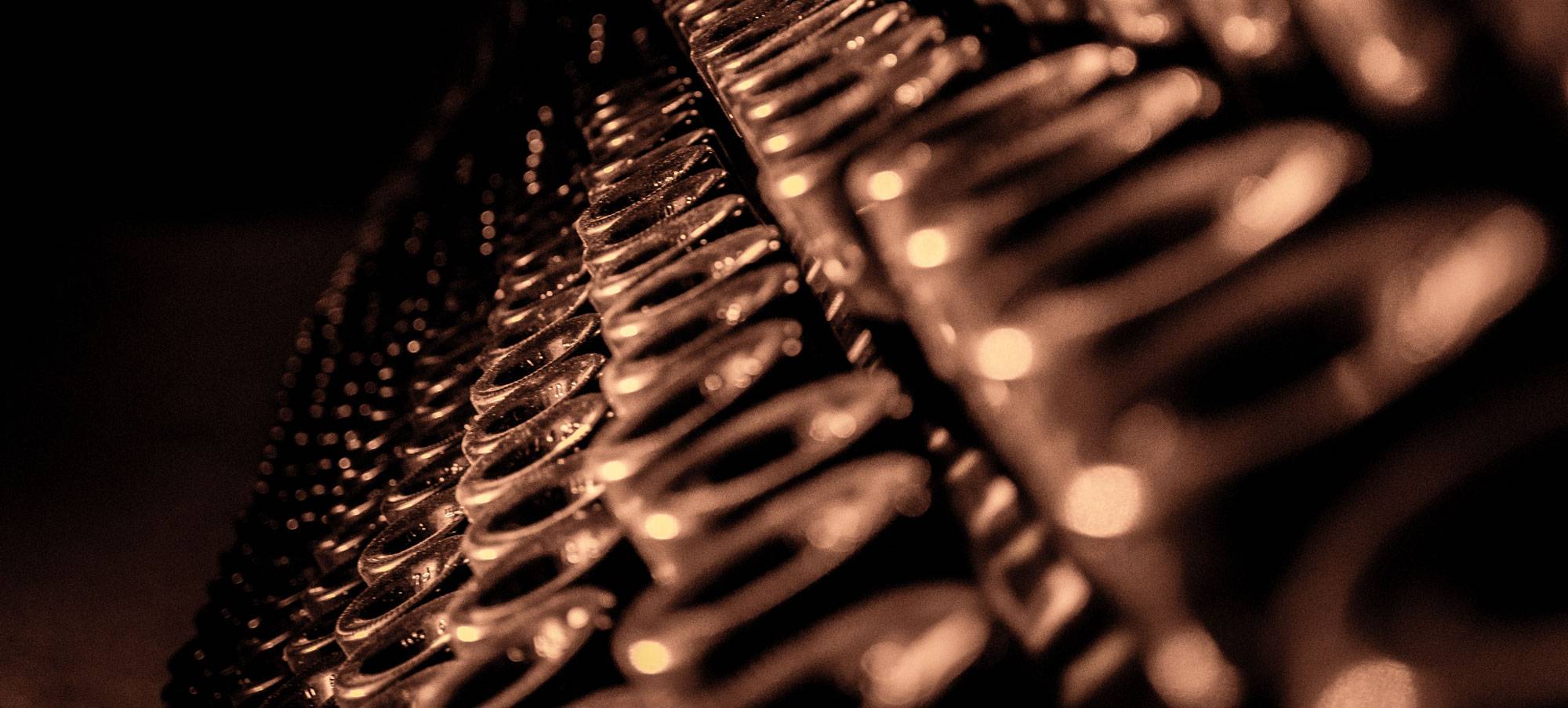
Dosage is one of the key stages in the production of Champagne. After the second fermentation in bottle and ageing in the Champagne cellars, the bottles are riddled to gather the sediment from the fermentation into the neck.
During disgorgement, this sediment is removed. The bottle then loses a small amount of wine that must be replaced. This is the moment when dosage takes place: the producer adds the well-known liqueur de dosage, also called the liqueur d’expédition. This liqueur is made from wine of the Champagne AOC in which a certain percentage of sugar has been dissolved.
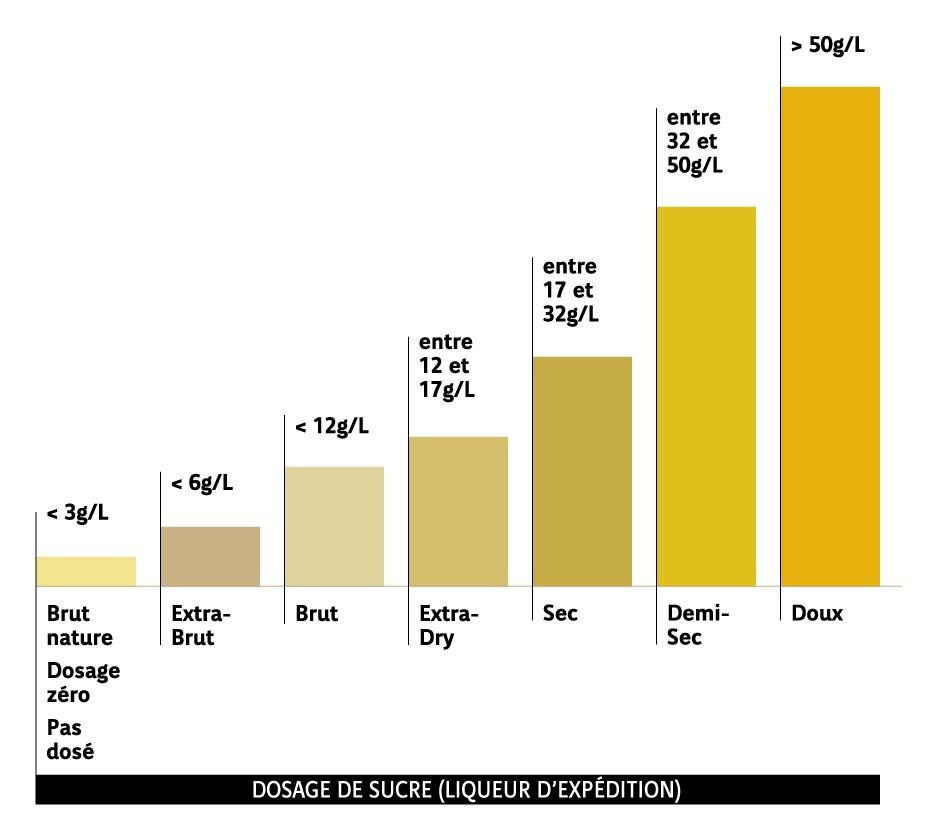
It is this sugar content that determines the category of the Champagne:
- Around 1 cl of liqueur is generally added to a 75 cl bottle.
- The liqueur may contain more or less sugar, which will adjust the balance between freshness, acidity and roundness.
Dosage is therefore not an arbitrary addition of sugar: it is a subtle, meticulous step designed to reveal the producer’s intention and harmonise the cuvée.
3. The different types of dosage
Regulations require that the sugar content be clearly indicated on the label using the following categories:
- • Doux : more than 50 g of sugar per litre
- • Demi-sec : between 32 and 50 g/l
- • Sec : between 17 and 32 g/l
- • Extra-dry : between 12 and 17 g/l
- • Brut : less than 12 g/l
- • Extra-brut : between 0 and 6 g/l
Finally, when a Champagne contains less than 3 g/l and no sugar has been added, the mentions brut nature, non dosé or dosage zéro may be used.
These categories offer a very broad palette, allowing Houses, Vignerons and Cooperatives to propose varied styles, from the driest to the most generous.
4. How does dosage influence the style of Champagne?
Dosage plays a decisive role in the balance and identity of Champagne; its function goes well beyond simply refilling the bottle.
Objective: preserve the wine’s identity
If the aim is to respect the purity and personality of the Champagne as much as possible, the producer will choose a very neutral liqueur, which adds neither additional aromas nor marked sweetness.
Objective: enrich aromatic expression and complexity
Conversely, to add complexity or roundness, they may opt for a liqueur made from carefully selected reserve wines. This approach can enhance certain notes, reinforce richness or create a unique style. In practice, many factors influence this decision: the vintage, the level of acidity, the structure of the wine, and the stylistic signature of the house.
In practice, many factors influence this decision: the vintage, the level of acidity, the structure of the wine, and the stylistic signature of the house.
5. Which dosage for which occasion?
To recommend Champagne effectively, especially in a professional context, it is essential to know which dosage is most appropriate for each tasting moment.
For an aperitif or celebrations
Brut Champagne remains the most universal style. Its balance makes it a reliable choice appreciated by most guests.
With fish or seafood
An Extra‑brut Champagne is often ideal. Its low sugar content gives it lively acidity, particularly suited to iodised or delicate dishes.
With spicy dishes
An Extra‑dry Champagne, with its slight sweetness, offers the right balance to accompany spicy dishes without losing freshness.
With desserts
Serving a dessert with a Brut or Extra‑brut Champagne will create a perception of bitterness. It is therefore better to choose a Sec, Demi-sec or Doux Champagne, whose sweetness will naturally echo that of the dish. These pairings help provide high‑quality recommendations and guide customers, guests or students with precision.
6. Why is mastering dosage essential?
For sommeliers, wine merchants, bartenders, or anyone who regularly advises on Champagne, knowing the different dosages is a real asset.
It makes it possible to:
- understand the style of a cuvée more precisely,
- explain clearly the diversity of Champagne wines,
- guide effectively towards suitable food and wine pairings,
- and better highlight the work of producers.
To explore this topic further, the Champagne E-Learning course is an ideal resource. Free and accessible online, it makes it possible to master the fundamentals progressively and enjoyably.